Can Salt Ruin Pepper Mills? Yes - Here’s How
A pepper mill that suddenly feels stiff, gritty or plain useless usually has a simple story behind it. If you have ever wondered, can salt ruin pepper mills, the short answer is yes. Not always at once, and not every mill in the same way, but salt is far harder on a grinding mechanism than many people realise.
That matters if you are tired of buying kitchen tools twice. A good mill should earn its place on the worktop for years, not give up after a few damp dinners and a handful of seasoning mistakes. The issue is not that salt is somehow too tough to grind. It is that salt behaves differently from peppercorns, and poor materials do not forgive that difference.
Can salt ruin pepper mills over time?
Yes, especially if the mill was designed for pepper only or built with parts that do not stand up well to corrosion. Salt attracts moisture from the air. In a warm kitchen, near steam from the hob, or in a home with natural humidity, that moisture can cling to the grinding mechanism and begin to cause trouble.
Peppercorns are comparatively dry and oily. Salt crystals are mineral, abrasive and moisture-loving. Put salt through a mechanism made for pepper and you may end up with clogging, rust, seized parts or an uneven grind. In cheaper mills, that can happen surprisingly quickly.
This is where many people get caught out. From the outside, salt and pepper mills often look nearly identical. Inside, they should not be treated as interchangeable unless the manufacturer says so plainly.
Why salt is tougher on a mill than pepper
Salt has two awkward habits. First, it draws in moisture. Second, once moisture gets involved, it can compact and cake. That means the grinding mechanism is not only dealing with crystals, but also with clumps and residue that settle into moving parts.
If those parts are made from unsuitable metal, corrosion becomes the real problem. Rust or oxidation can roughen the mechanism, increase friction and eventually stop the mill turning properly. Even before outright failure, performance drops off. You get inconsistent grind size, more effort at the wrist, and that irritating crunch that tells you something inside is not right.
Material choice matters here. A well-made salt mill uses components chosen specifically to resist corrosion. A poorly made one may look smart for a month and then start ageing at speed.
What damage does salt actually cause?
The damage usually shows up in a few familiar ways. The internal mechanism may corrode, particularly if it contains low-grade steel. The salt can also clump inside the chamber, which puts strain on the grinder and makes it harder to turn. Over time, that added resistance can wear down threads, burrs or adjustment points.
Sometimes the problem looks like a fault in the design when it is really a mismatch between seasoning and mechanism. A pepper mill used for salt may not fail on day one, but it is being asked to do a job it was never built for.
When salt will not ruin a mill
There is a fair bit of needless confusion around this topic. Salt does not automatically destroy every grinder it touches. A mill specifically engineered for salt should handle it perfectly well with normal use.
The key phrase is specifically engineered. That means corrosion-resistant grinding parts, sensible construction and a body that keeps moisture exposure to a minimum. In a quality salt mill, salt is not a threat. It is simply the ingredient the mechanism was made to process.
This is why dedicated mills exist in the first place. It is not marketing fluff. It is practical design. If you want reliable performance and a long service life, matching the right seasoning to the right mill is the sensible route.
Pepper mill or salt mill - does the difference really matter?
It does, particularly if you care about durability. Many households use the terms loosely, but proper mills are not all built the same way. A pepper mill is generally designed to crack and grind hard, dry peppercorns. A salt mill needs to cope with a mineral crystal that can pull moisture from the air and encourage corrosion.
That difference affects the internal parts more than the outer appearance. Two mills may sit neatly as a pair on the table, but the mechanisms inside can be quite different. If you use one in place of the other, you may not notice a problem straight away. Give it time, and the wear tends to show.
For anyone buying once and buying properly, that distinction is worth respecting.
Signs you may have put salt in the wrong mill
If your mill has become harder to turn, produces an inconsistent grind, sheds rust-coloured dust, or jams after sitting unused, salt may be the culprit. Another common sign is visible caking inside the chamber or around the grinding head.
Not every jammed grinder has been ruined, but these are warning signs. Left alone, they often get worse rather than better.
Can you save a pepper mill after using salt?
Sometimes yes, sometimes no. It depends on how long the salt has been inside, how much moisture has been present, and what the mechanism is made from.
If the issue is only mild caking, emptying the mill and letting it dry thoroughly may help. In some cases, a careful clean according to the maker's instructions can restore function. But if corrosion has set in or the grinding parts have already degraded, there is only so much you can do. Once metal begins to pit or seize, performance rarely returns to what it was.
This is one of those kitchen problems where prevention is cheaper than rescue. A premium mill built for the job is usually the better investment than nursing a flimsy one through repeated failures.
How to stop salt from damaging your mills
The simplest rule is also the best one: use a proper salt mill for salt and a proper pepper mill for pepper. That alone avoids most problems.
After that, a bit of sensible care goes a long way. Keep mills away from direct steam on the hob. Do not grind over a boiling pan if you can help it, as rising moisture can travel straight back into the mechanism. Store salt in a dry environment, and if the mill is refillable, make sure the chamber is dry before topping it up.
Choice of salt also plays a part. Very damp or flavoured salts can be more troublesome than dry, clean crystals. Large crystals may also need a mill designed to handle them. As ever, forcing the mechanism is a poor plan. If a mill resists, there is a reason.
What to look for in a long-lasting salt or pepper mill
Solid construction matters more than showroom shine. Look for mills with clear information about the grinding mechanism and whether it is intended for salt, pepper or both. Corrosion resistance is essential for salt. Consistent grind control matters for pepper. A proper warranty is also a strong sign that the maker expects the product to last.
This is where better kitchenware separates itself from throwaway alternatives. A dependable mill should feel steady in the hand, turn cleanly, and keep doing its job day after day. That is not a luxury. It is the baseline any serious cook ought to expect.
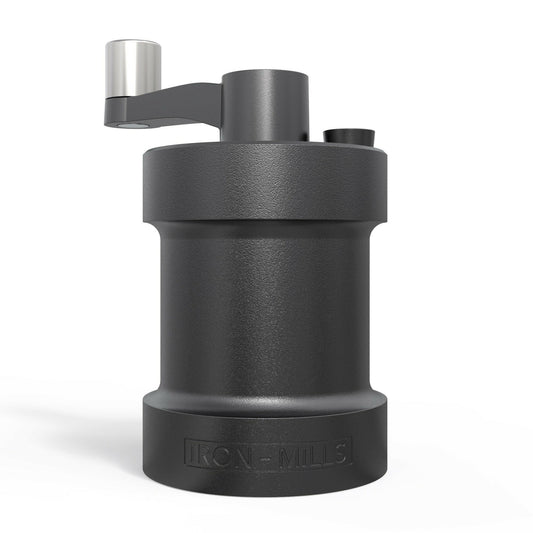
Brands such as Iron-Mills build their reputation on that point for good reason. If a mill lives on the worktop and gets used daily, it should be made with daily life in mind.
The real problem is not salt - it is poor design
Salt gets the blame, but the bigger issue is often cheap construction. A badly made grinder can struggle with ordinary use full stop. Salt simply exposes weaknesses faster. Low-grade metals, vague product claims and flimsy internal parts are a recipe for disappointment whether you are seasoning chips or finishing a roast.
A well-designed mill accounts for how people actually cook. It expects steam, repeat use, refilling, and the occasional busy evening when the kitchen is doing ten things at once. That sort of product is not built to impress for a week. It is built to stay useful.
If you have been replacing grinders every year or two, it is not because mills are disposable by nature. It is because too many are made that way.
So, can salt ruin pepper mills? Absolutely - if the mill was never meant for salt, or if the materials are not up to the job. But the answer is not to avoid salt. It is to choose kitchen tools with the right mechanism, the right materials and enough substance to last. A good mill should not be another small household annoyance. It should be one of the most dependable things in your kitchen.