British Built Salt Grinder Review
You notice a poor salt mill at the exact wrong moment - when the pan is hot, the food is nearly ready, and the grinder either clogs, sheds grit, or gives up altogether. That is why a British made salt grinder review matters. If you cook often, the mill in your hand is not a decorative extra. It is a working tool, and it ought to perform like one.
The problem with much of the market is simple enough. Plenty of grinders look respectable on a shelf, feel light in the hand, and manage a few months of decent service before wobbling, jamming or wearing out. They are built to be replaced, not relied on. A well-made British grinder should offer something better - stronger materials, steadier grinding, and the sort of construction that still feels sound after years of daily use.
What a British made salt grinder review should actually judge
A fair review is not about flags and sentiment alone. British manufacture has real value when it is backed by proper engineering, consistent quality control and materials chosen for hard use. If a mill is marketed as built in Britain, that should show up in how it feels, how it grinds and how long it lasts.
The first thing worth judging is construction. A serious salt grinder should have weight and stability, not a hollow body that flexes under pressure. Materials matter here. Cast iron, solid metal fittings and dependable internal components will usually outlast lightweight plastic bodies or thin decorative casings. The difference is obvious after a few weeks in a busy kitchen.
Grinding performance comes next. Salt should come through cleanly and consistently, whether you want a finer finish for chips or a coarser crush for meat and vegetables. Cheap mills often fail at this basic job. They produce uneven crystals, seize when humidity shifts, or require so much effort that seasoning becomes a nuisance. A quality grinder should feel controlled rather than temperamental.
Then there is durability over time. This is where many attractive mills fall apart, sometimes literally. Threads wear down, tops loosen, mechanisms corrode and finishes mark too easily. A grinder meant for everyday use should be judged after repeated handling, repeated refilling and repeated contact with kitchen moisture, not after one tidy tabletop demonstration.
British made salt grinder review - where quality shows up first
In practice, the strongest British-made mills tend to separate themselves in the hand before they do on the table. They feel planted. There is resistance where there should be resistance, and movement where there should be movement. Nothing rattles. Nothing feels overdesigned. That no-nonsense solidity is not glamorous, but it is exactly what most home cooks are missing when they replace one disappointing grinder after another.
Cast iron is especially compelling in this category because it brings material honesty. It is tough, stable and suited to kitchens that are used properly rather than preserved for show. There is a trade-off, of course. A cast iron mill is heavier than a lightweight acrylic or timber alternative, and some buyers may prefer a softer visual style. But if your priority is longevity and dependable performance, the extra substance is an advantage rather than a drawback.
The mechanism is equally important. Salt is unforgiving. It attracts moisture and can be hard on poorly protected internals. That is why grinder quality is not just about the outer shell. A mill can look excellent and still fail if the working parts are not up to the job. Good design here means a mechanism that keeps turning cleanly, delivers a consistent grind, and does not feel strained under normal use.
Who should buy a British-made salt mill?
Not everyone needs the heaviest or most substantial grinder on the market. If a mill is only brought out for the odd dinner party, appearance may matter more than long-term endurance. But for keen home cooks, confident entertainers and anyone tired of replacing kitchen basics, spending more once usually makes better sense than spending less repeatedly.
This is particularly true for buyers who care about workmanship and origin. British-made kitchenware still carries a certain expectation - not just heritage, but accountability. People want to know where a product comes from, what it is made of, and whether the maker expects it to last. In a category crowded with generic imports and throwaway designs, that clarity matters.
A good British-made grinder also makes sense as a gift. It has presence, usefulness and a practical sort of luxury. Unlike novelty kitchen gifts, it earns its place quickly and stays there. That said, the recipient does need to appreciate functional quality. If they want something purely ornamental, a heavier professional-style mill may not be their first choice.
The real trade-offs in any British made salt grinder review
A worthwhile review should be honest about compromises. Better mills generally cost more upfront. That is the plain truth. British manufacturing, stronger materials and longer warranties do not usually sit at bargain-basement prices.
The question is whether the price reflects value or just positioning. In this category, value is easy enough to judge. If a grinder lasts years rather than months, grinds properly every day, and avoids the cycle of replacement purchases, it starts to look less like a premium indulgence and more like a sensible bit of kit.
Weight can be another consideration. A substantial mill feels reassuring to most users, but anyone with reduced grip strength may prefer a shape and mechanism designed for easier handling. Design matters here as much as material. The best mills balance solidity with comfort, rather than chasing heft for its own sake.
Style is also personal. Some British-made mills lean traditional, while others suit modern kitchens better. Neither is inherently superior. What matters is whether the design supports the practical job. A beautiful grinder that slips in the hand or refills awkwardly is not well designed, whatever its finish.
What separates a lasting mill from a disposable one
The difference usually comes down to intent. Disposable mills are made to hit a price point. Lasting mills are made to survive regular use. You can see that difference in the fit of the parts, the confidence of the mechanism and the willingness of the maker to stand behind the product.
Warranty cover is a useful sign. So is straightforward language about materials and manufacture. Brands that build for the long term tend not to hide behind vague claims. They tell you what the mill is made from, where it is made, and why it should outlast the cheaper alternatives. That sort of confidence is earned, not invented.
For buyers comparing options, it helps to ask a few plain questions. Does the grinder feel substantial enough for daily use? Is the grind consistent? Are the materials chosen for durability rather than display? And does the maker treat the product like a serious tool or a passing kitchen accessory? Those answers will tell you more than any polished lifestyle photograph ever could.
A practical verdict for everyday cooks
So, what is the verdict in this British made salt grinder review? The best examples justify their place by doing ordinary jobs exceptionally well. They grind cleanly, feel dependable, and hold up under the rhythm of real cooking. They are not throwaway purchases, and that is precisely the point.
For cooks who are fed up with lightweight grinders that crack, jam or lose their bite, a British-made mill is often the sensible step up. You are paying for better materials, better build quality and a product that treats seasoning as part of cooking, not an afterthought. If that mill is cast iron and built with proper intent, so much the better.
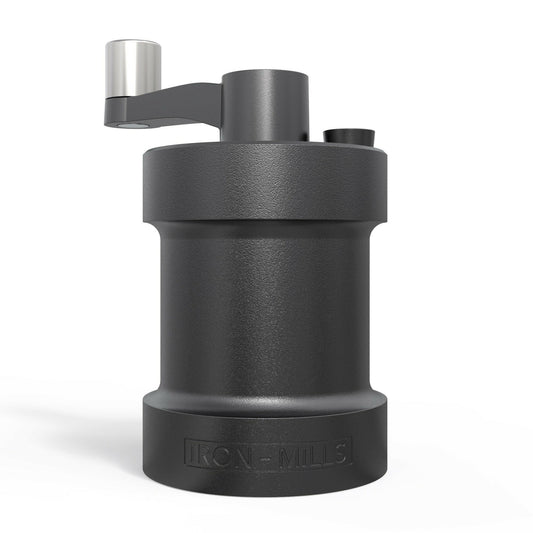
Iron-Mills sits squarely in that part of the market - built for people who would rather buy once and buy properly. That will not suit every shopper, but it will suit anyone who values reliability over gimmicks and substance over short-term savings.
The best kitchen tools do not beg for attention. They simply get on with the job, day after day, and make cooking feel that bit more certain every time you reach for them.