Heavy Duty Grinder Review for Lasting Use
Heavy Duty Salt & Pepper Mills: What Makes a Quality Grinder?
A good salt or pepper mill should do its job reliably, day after day. Whether you're seasoning a steak, preparing a sauce or adding the finishing touches to a meal, the last thing you want is a grinder that jams, feels flimsy or struggles to produce the grind you're after.
But what actually makes a salt or pepper mill heavy duty? Is it the weight, the materials, the grinding mechanism or a combination of all three?
In this guide, we'll explore what separates a well-engineered mill from a basic grinder, which materials are worth considering and what to look for if you're investing in something designed to last.
What Makes a Salt or Pepper Mill Heavy Duty?
The term heavy duty is often used to describe kitchen equipment, but it doesn't have a defined technical standard when it comes to salt and pepper mills.
A heavy mill isn't necessarily a good one, just as a lightweight mill isn't automatically inferior.
What matters is how the product has been designed and constructed.
A well-made salt or pepper mill should offer:
-
Durable construction: Materials capable of withstanding regular handling and repeated use.
-
A reliable grinding mechanism: Components designed to grind the intended seasoning effectively.
-
Adjustable coarseness: The ability to vary the grind to suit different dishes and preferences.
-
Practical ergonomics: A comfortable grip and straightforward operation.
-
Refillable design: A product intended for continued use rather than disposal.
-
Long-term support: Clear warranty terms and access to assistance if something goes wrong.
These are more meaningful indicators of quality than weight or appearance alone.
Why Material Choice Matters
A salt or pepper mill is a mechanical product. Its body needs to support the grinding mechanism, withstand repeated handling and remain comfortable to use.
Different materials offer different advantages.
Stainless steel
Stainless steel is an excellent choice for durable kitchen equipment, offering a combination of strength, corrosion resistance and a clean, contemporary appearance.
However, not all stainless steels are the same. Different grades have different mechanical properties and levels of corrosion resistance.
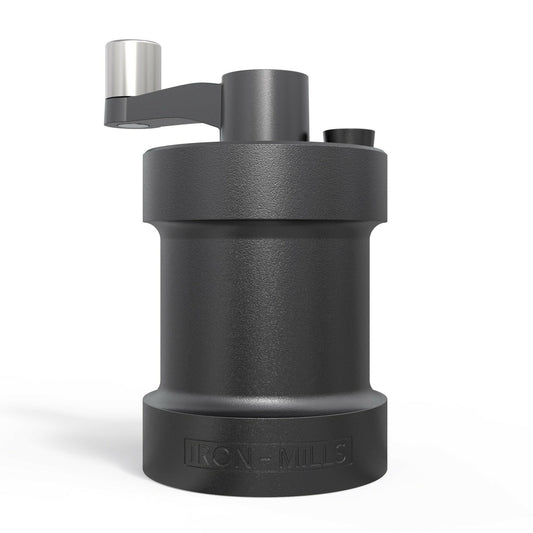
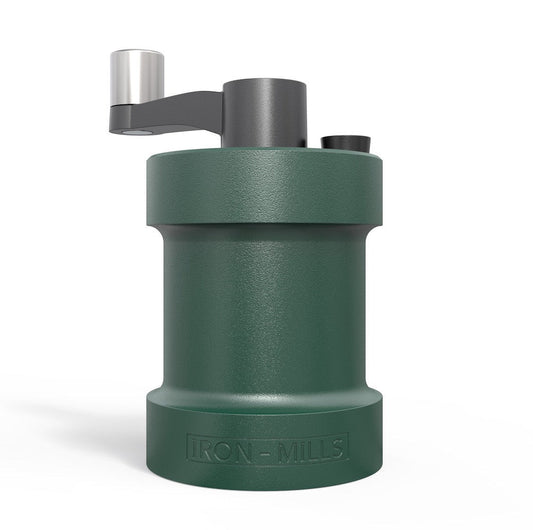
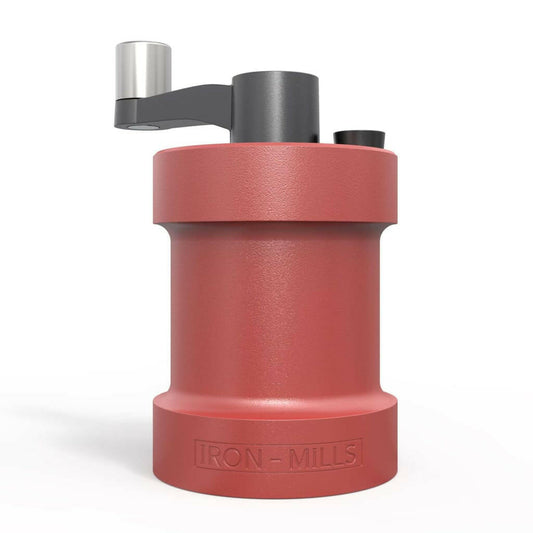
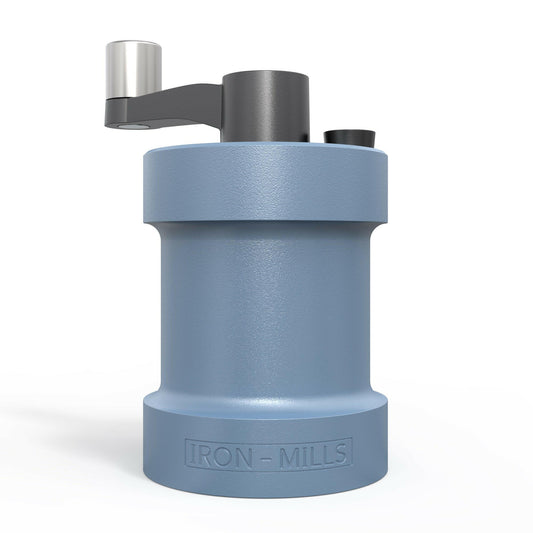
At Iron-Mills, we use duplex 2205 stainless steel for our cast mill bodies.
Duplex 2205 combines high strength with excellent corrosion resistance. It's an engineering material used in demanding applications where durability and material performance are important.
These properties make it a considered choice for a kitchen product designed for repeated use.
Our mills are finished in a range of colours, alongside a brushed stainless steel option, allowing the same underlying construction to suit different kitchen styles.
Wood
Wooden mills have long been popular, particularly in traditional kitchens. They offer warmth, relatively low weight and a wide choice of finishes.
Their durability depends on the type of wood, construction and quality of the internal mechanism. As with most wooden kitchenware, prolonged exposure to moisture is best avoided.
Acrylic and plastic
Acrylic mills are often affordable and allow you to see how much seasoning remains inside.
They can be perfectly adequate for everyday cooking, although their resistance to scratching, impact and long-term wear varies considerably between products.
Material alone doesn't determine whether a grinder is good or bad. The overall design and quality of construction matter just as much.
The Grinding Mechanism Is Just as Important as the Body
It's easy to focus on the exterior of a mill, but the internal grinding mechanism determines much of its performance.
Even a beautifully made body offers little practical value if the mechanism is unreliable.
A pepper mill needs to break down hard peppercorns while allowing the user to control the resulting grind. A salt mill faces a different challenge: its mechanism must be suitable for salt, which can promote corrosion in susceptible metals, particularly when moisture is present.
This is why material selection matters inside the mill as well as outside it.
Our pepper grinding mechanism
Iron-Mills pepper mills use a 40-tooth grinding burr made from 420H stainless steel.
This hardened stainless steel is selected for its suitability as a cutting and grinding component.
The mechanism is designed to deliver an adjustable grind, allowing you to choose a finer setting for incorporating pepper into dishes or a coarser setting for finishing food.
As with any pepper grinder, the resulting seasoning will contain a range of particle sizes rather than perfectly identical pieces. The aim is reliable grinding performance and useful control over coarseness.
Our salt grinding mechanism
Iron-Mills salt mills use a 50-tooth burr made from 316 stainless steel.
Grade 316 is recognised for its corrosion resistance, making it particularly suitable for components exposed to salt.
It's important to remember that corrosion-resistant does not mean corrosion-proof. Keeping salt dry and following appropriate care instructions will help protect any precision grinding mechanism.
Although salt and pepper mills may look similar externally, using a mechanism intended for the correct ingredient is important.
For more information, read our guide to whether you can use a pepper mill for salt.
Grind Adjustment and Everyday Performance
Different dishes benefit from different grind settings.
A finer pepper grind can be useful when seasoning sauces, dressings or dishes where you want the pepper distributed throughout. Coarser pepper is often preferred for steaks, roasted vegetables and finishing dishes.
The same principle applies to salt, although the results will depend on the type and size of salt crystals used.
A good adjustment mechanism should be straightforward to operate and allow you to select a grind that suits your preferences.
It's also worth remembering that not every grinder performs identically. The range of achievable grind sizes depends on the design of its mechanism, and a higher price doesn't automatically guarantee a coarser or finer result.
The most useful mill is one that provides the range of adjustment you actually need.
Capacity, Refilling and Practical Design
Some of the most important features of a salt or pepper mill only become apparent after you've used it for a few weeks.
Capacity is one example.
A small grinder may look attractive on the table, but frequent refilling can become inconvenient if you cook regularly.
Iron-Mills grinders have an approximate capacity of 70 grams, depending on the ingredient and its size.
We also offer a dedicated filling funnel to make transferring salt or peppercorns into the mill easier.
Another consideration is residual seasoning.
After grinding, small amounts of salt or pepper can remain around the outlet and fall onto the surface beneath the mill. This is normal for many grinder designs and can be more noticeable at coarse settings.
For those who prefer to keep worktops tidy, our aluminium mill rests provide a dedicated place to put the mills and help collect loose seasoning.
These practical details might seem minor, but they can make a difference to everyday use.
Does a Heavier Grinder Mean Better Quality?
Not necessarily.
Weight can contribute to how substantial a product feels, but it should never be treated as a substitute for good engineering.
A heavy grinder with a poorly designed mechanism may be less pleasant to use than a lighter grinder with an excellent one.
Equally, a solid metal body can provide a reassuring feel, particularly for someone who prefers substantial kitchen equipment.
The right choice depends partly on personal preference.
Someone with reduced hand strength may prefer a lighter mill, while another cook might value the solid feel and construction of a metal-bodied design.
When comparing products, it's worth considering the balance of materials, ergonomics and performance rather than concentrating on weight alone.
Are Premium Salt and Pepper Mills Worth the Investment?
A premium price should come with a clear explanation of what you're paying for.
In a well-engineered grinder, the cost may reflect material selection, manufacturing processes, machining, finishing, assembly and the design of its internal components.
These aspects aren't always obvious when two mills are sitting next to each other on a shelf.
At Iron-Mills, our approach is to focus on durable materials, purposeful engineering and products intended for long-term use.
We also provide a 10-year warranty on the grinding mechanisms, reflecting our confidence in these components. The warranty is subject to its terms and conditions.
That doesn't mean a premium mill will never require maintenance or experience a fault. It means the product has been designed with durability in mind, rather than simply meeting the lowest possible manufacturing cost.
Ultimately, whether that investment is worthwhile depends on how much you use your mills and what you value in your kitchen equipment.
How to Care for a Heavy Duty Salt or Pepper Mill
Even durable kitchen equipment benefits from sensible care.
For everyday maintenance, we recommend a few straightforward precautions:
-
Keep the mill away from prolonged exposure to moisture and steam.
-
Use a soft cloth to clean the exterior and dry it thoroughly afterwards.
-
Never immerse the mill in water or place it in a dishwasher.
-
Only use suitable, dry salt or peppercorns in the appropriate mill.
-
Avoid forcing the mechanism if it becomes difficult to operate.
-
If the mechanism becomes blocked, seek the appropriate cleaning or dismantling guidance rather than attempting to force it.
Moisture is particularly important to consider when storing salt. Damp or clumped salt can interfere with grinding performance, regardless of the quality of the mechanism.
For further information, see our Care & Use guide.
Choosing a Grinder That's Built to Last
A heavy-duty salt or pepper mill shouldn't need to rely on exaggerated claims about strength or performance.
Its quality should be evident in the materials, the engineering of its mechanism and how it performs during everyday use.
Look beyond the weight and appearance. Consider what the product is made from, how the grind is adjusted, whether it can be refilled easily and what support the manufacturer provides.
At Iron-Mills, we believe everyday kitchen equipment deserves the same consideration as any other well-engineered product.
Our mills are built around that principle: quality materials, precision engineering and practical design, brought together in Britain to create kitchen tools intended to be enjoyed for years to come.