Can Salt Corrode Metal Grinders? The Facts
Can Salt Corrode Metal Grinders? The Facts
Salt is an essential part of everyday cooking, but it can be surprisingly demanding on the materials used in kitchen equipment.
If you've ever experienced a salt grinder becoming stiff, developing rust or refusing to grind properly, you might have wondered whether the salt itself is responsible.
The short answer is yes: salt can contribute to corrosion in metal grinders, particularly when moisture is present. However, not all metals react in the same way, and the choice of grinding mechanism makes a significant difference.
Understanding why corrosion occurs, and how to prevent it, can help you choose a more durable salt mill and keep it performing reliably.
Why Can Salt Cause Corrosion?
Most cooking salt consists primarily of sodium chloride. The chloride component is particularly relevant when considering corrosion.
Many metals, including stainless steel, rely on a thin protective surface layer to resist corrosion. Under certain conditions, chloride ions can interfere with this protection, allowing localised corrosion to develop.
Moisture is an important part of this process.
When salt dissolves in water, it produces a solution containing mobile ions. This solution can act as an electrolyte, enabling the electrochemical reactions involved in corrosion.
This is why dry salt is generally less corrosive than salt exposed to moisture.
In a kitchen, that moisture can come from several sources:
-
Steam rising from boiling pans.
-
Condensation forming around the grinding mechanism.
-
Damp salt added during refilling.
-
Water entering the mill during cleaning.
-
Prolonged exposure to high humidity.
The extent of any corrosion depends on the metal, the amount of moisture, the exposure conditions and how long the components remain affected.
Can Stainless Steel Salt Grinders Rust?
Stainless steel is well known for its corrosion resistance, but the term stainless doesn't mean that a material can never corrode.
Different grades of stainless steel have different properties, and some are better suited to chloride exposure than others.
Ordinary carbon steel can develop visible reddish-brown rust when exposed to moisture. Stainless steel is generally more resistant, although certain conditions can still cause surface staining or localised corrosion.
One form is called pitting corrosion, where small areas of the protective surface layer become compromised.
Another is crevice corrosion, which can develop in narrow gaps where moisture and contaminants remain trapped.
These are important considerations when designing a salt grinder, because its mechanism is repeatedly exposed to salt crystals and may occasionally encounter moisture.
The solution isn't necessarily to avoid metal entirely. It's to select materials appropriate for the application.
Why Iron-Mills Uses 316 Stainless Steel for Salt Grinding
At Iron-Mills, material selection is an important part of our product design.
Our salt mills use a 50-tooth grinding burr manufactured from grade 316 stainless steel.
Grade 316 contains molybdenum, an alloying element that improves resistance to certain forms of chloride-induced corrosion compared with commonly used grades such as 304.
This makes it a considered choice for a grinding mechanism designed to work with salt.
Although ceramic mechanisms are common in salt grinders because they don't rust, suitably selected stainless steel can also provide an effective solution.
The important distinction is between ordinary steel components and those specifically selected for their intended environment.
It's also worth being clear about the limitations: grade 316 is corrosion-resistant, not corrosion-proof. Prolonged exposure to damp salt and unsuitable cleaning practices can still cause problems.
Our approach is to combine appropriate material selection with straightforward care guidance.
The importance of the mill body
The external construction is another important consideration.
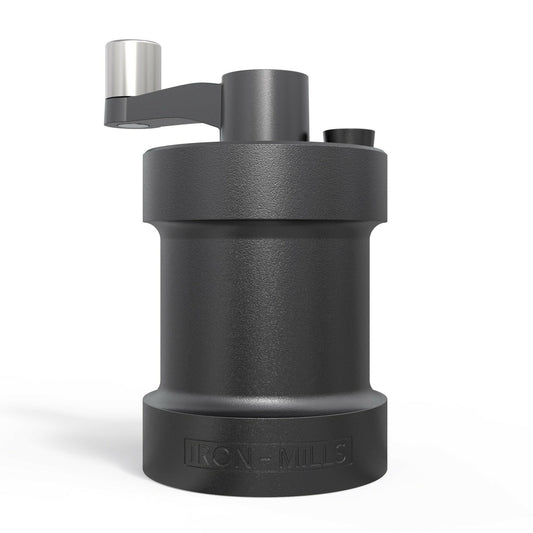
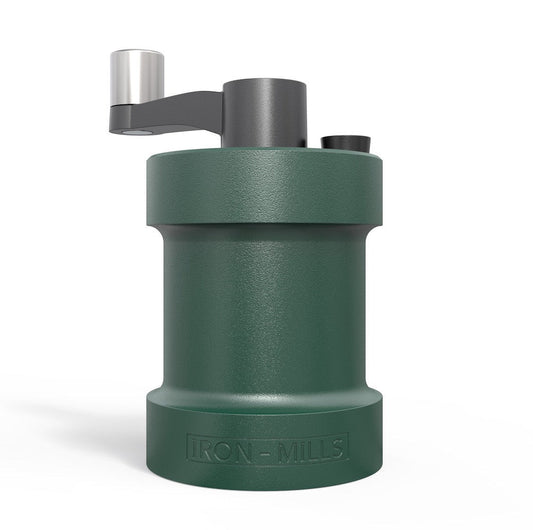
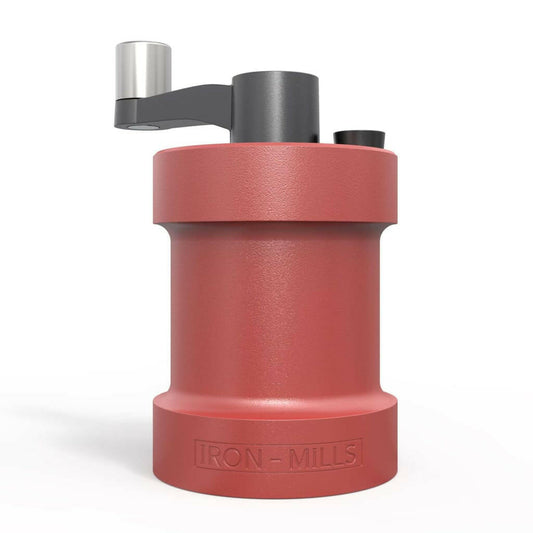
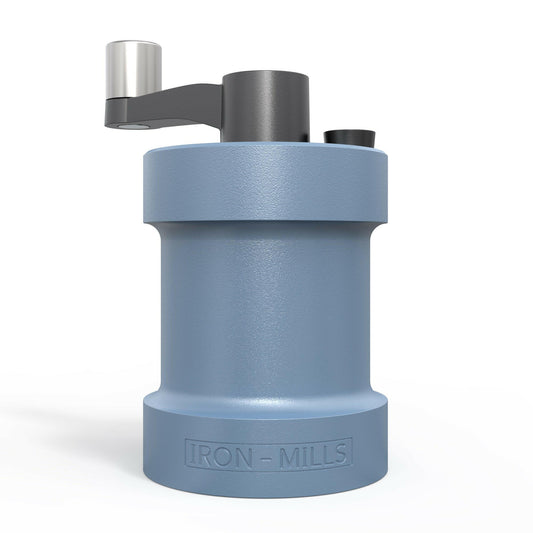
Iron-Mills salt and pepper mills feature cast duplex 2205 stainless steel bodies.
Duplex 2205 offers high mechanical strength and excellent corrosion resistance, making it well suited to products where durability and long-term use are important.
The body and grinding mechanism perform different functions, which is why different stainless steel grades are used.
The result is a product designed around the requirements of its individual components rather than relying on one material for every application.
Why Steam Can Cause Problems for Salt Mills
One of the easiest ways to introduce moisture into a salt grinder is to hold it directly over a steaming saucepan.
As steam rises, moisture can enter the underside of the mill and reach the grinding mechanism or salt chamber.
If enough moisture is present, salt crystals may begin to stick together, forming clumps that interfere with normal grinding.
This is not necessarily corrosion.
A mill that becomes difficult to turn may simply have compacted salt obstructing the mechanism. However, leaving damp salt in contact with susceptible metal components can also increase the risk of corrosion over time.
The simplest precaution is to avoid prolonged exposure to steam.
Where practical, grind salt into your hand, a spoon or a small dish before adding it to food in a steaming pan.
This reduces unnecessary moisture exposure and can make it easier to judge how much seasoning you're adding.
What Are the Signs of Corrosion in a Salt Grinder?
Corrosion and mechanical blockages can produce similar symptoms, so it's worth distinguishing between them.
Possible signs of corrosion include:
-
Reddish-brown staining on susceptible metal components.
-
Small pits or rough areas developing on exposed metal surfaces.
-
Persistent discolouration that isn't simply loose salt residue.
-
Deterioration of affected components following prolonged moisture exposure.
Other symptoms, such as a stiff adjustment mechanism, reduced grinding performance or salt emerging unevenly, may instead be caused by clumped salt or a physical obstruction.
These symptoms alone don't prove corrosion has occurred.
If a grinder becomes difficult to operate, avoid forcing it. Continuing to apply excessive force to a blocked mechanism may cause damage.
Instead, check the manufacturer's guidance on safely emptying and cleaning the mill.
If you suspect a component is damaged or corroded, contact the manufacturer for advice.
How to Prevent Corrosion in a Salt Mill
Even a grinder made from corrosion-resistant materials benefits from sensible care.
Fortunately, keeping a salt mill in good condition doesn't require an elaborate maintenance routine.
1. Use dry salt
Salt should be dry and free-flowing before being added to the mill.
Very damp or heavily clumped salt may struggle to pass through the grinding mechanism and could introduce unnecessary moisture.
Follow the manufacturer's recommendations regarding suitable salt types and crystal sizes.
2. Avoid prolonged steam exposure
Try not to hold the mill directly over steaming pans for extended periods.
Keep it away from persistently damp areas when it isn't being used.
3. Keep the exterior clean
Wipe the outside with a soft cloth when necessary.
For Iron-Mills products, a lightly damp cloth can be used for external cleaning, followed by thorough drying.
Avoid abrasive pads or harsh cleaning products that could damage the surface finish.
4. Never immerse the mill in water
Salt and pepper mills contain mechanical components that may not be suitable for immersion.
Iron-Mills grinders should not be soaked or placed in a dishwasher.
If internal cleaning is required, follow the appropriate product-specific instructions rather than attempting to wash the assembled mechanism.
5. Don't force a blocked mechanism
If your mill stops grinding smoothly, the cause may be compacted seasoning rather than a damaged component.
Avoid applying excessive force.
Refer to the manufacturer's cleaning or maintenance guidance, particularly before attempting to dismantle the mill.
You can find further information in our Care & Use guide.
Does Sea Salt Cause More Corrosion Than Table Salt?
Both sea salt and ordinary table salt primarily contain sodium chloride, so either can contribute to corrosion when moisture is present.
However, different salts can behave differently depending on their composition, crystal size and moisture content.
Some sea salts contain additional minerals, including magnesium and calcium salts, which can influence how they respond to humidity.
Crystal size also affects how effectively salt passes through a grinding mechanism, although this is separate from the underlying corrosion chemistry.
For everyday use, the most important consideration is whether the salt is dry and suitable for your particular grinder.
A dry, free-flowing salt recommended by the manufacturer is generally a better choice than a damp or heavily clumped alternative.
Is a Metal Salt Grinder a Good Choice?
Absolutely, provided the materials have been selected appropriately.
Metal construction isn't inherently unsuitable for salt grinders. In fact, certain stainless steels offer an excellent combination of strength, durability and corrosion resistance.
What matters is understanding the difference between the metal used for the outer body and the material used for the grinding mechanism.
A well-designed salt mill should account for both.
At Iron-Mills, we use duplex 2205 stainless steel for our mill bodies and grade 316 stainless steel for our salt grinding burrs.
Both materials have been selected with their individual functions in mind.
Combined with appropriate maintenance, this provides a robust foundation for a salt mill intended for everyday use.
The Bottom Line: Can Salt Corrode Metal Grinders?
Yes. Salt can contribute to corrosion, particularly when moisture is present and the metal isn't sufficiently resistant to chloride exposure.
However, corrosion isn't inevitable, and not every stiff or blocked grinder has suffered corrosion damage.
Choosing a mill with materials appropriate for salt, keeping the seasoning dry and avoiding unnecessary moisture exposure can all help reduce the risk.
At Iron-Mills, in our salt mills we use carefully selected stainless steels, including duplex 2205 bodies and 316 stainless steel grinding mechanisms.
They're designed to combine durable construction with practical everyday performance, supported by our 10-year grinding mechanism warranty.
Good materials and sensible care go hand in hand. Together, they help ensure your salt mill remains a dependable part of your kitchen for years to come.