Why Is My Grinder Stuck? Fix a Jammed Mill
A grinder that refuses to turn has a knack for revealing itself halfway through supper, just as the potatoes need seasoning. If you are asking, why is my grinder stuck, the answer is usually not mysterious - but forcing it is rarely the right fix. A good salt or pepper mill should feel firm and controlled in the hand, not seized solid.
Most jams come down to moisture, an over-tightened setting, unsuitable seasoning, or a mechanism that has worn beyond sensible repair. The remedy depends on which one you are dealing with. Start gently, keep water away from the mechanism, and resist the temptation to attack it with brute force.
Why is my grinder stuck? Start with the likely cause
A mill works by feeding salt crystals or peppercorns into a grinding mechanism. When that route is blocked, or when the adjustable parts are clamped too tightly together, the mill cannot do its job. The handle, body or top may then feel stuck even though the fault lies inside.
Moisture is the usual culprit with salt. Salt draws moisture from the air, particularly beside a steaming hob, a boiling pan or a dishwasher. The crystals begin to cling together, forming a hard bridge above or within the mechanism. A damp refill can cause the same trouble. Once salt has clumped, turning the mill harder simply compacts it further.
Pepper mills have a different set of problems. Soft, stale or unusually large peppercorns can lodge in the grinding teeth. So can fragments of bay leaf, mixed spices, pink peppercorns or other ingredients that were never suited to the mill. A pepper mill is not a universal spice grinder, however tempting it may be when a recipe calls for something aromatic.
The grind setting also matters. On many mills, turning the adjustment right down for an extra-fine grind brings the moving parts very close together. If a large grain or peppercorn fragment is caught between them, the mechanism can bind. This is especially common after refilling, when a stray oversized piece finds its way into the works.
Finally, there is ordinary wear. Lightweight mills often use thin plastic components, weak spindles or poorly protected mechanisms. They may work adequately for a while, then slip, crack, corrode or jam under normal daily use. If the fault returns repeatedly despite careful cleaning and dry ingredients, it may be a construction problem rather than a maintenance problem.
Free a jammed salt or pepper mill without damaging it
Begin by loosening the grind adjustment slightly. Depending on the design, this may be a knob, screw or collar at the top or base. Turn it only a little at first, then try the mill again. If it starts moving, continue with a coarser setting for several turns to clear the obstruction before returning to your preferred grind.
If that does not work, empty the mill over a dry bowl or tray. Remove the top carefully if the design allows it, keeping note of the order of any washer, spring or adjustment piece. Do not dismantle parts that are not intended to come apart. A well-made mill should be serviceable in the ways its design permits, but prising at sealed sections can turn a small blockage into permanent damage.
For a pepper mill, tip out the peppercorns and brush away loose debris with a dry, soft brush. Turn the mechanism gently in both directions if it is designed to do so. Often, a lodged fragment will fall free once pressure is removed. Refill only with fresh, dry, whole peppercorns of a sensible size.
For a salt mill, deal with clumping before anything else. Brush out every visible crystal and leave the opened mill in a warm, dry room for several hours. Do not place it directly on a radiator, in an oven or in a microwave. Excessive heat can damage finishes, seals and internal components. Once dry, turn the mechanism slowly with no salt inside, then refill with completely dry salt.
Never run the mechanism under the tap. Water may seem like a quick way to dissolve salt, but it introduces moisture deeper into the mill, where it can cause corrosion and future clogs. The same warning applies to soaking, dishwashing and wiping the inside with a wet cloth. Clean the exterior with a lightly damp cloth if needed, then dry it immediately. Keep the grinding mechanism dry.
If you can see a blockage but cannot shift it with a brush, a wooden cocktail stick may help. Work patiently and avoid metal picks, knives or screwdrivers. They can blunt grinding surfaces, scratch protective coatings or distort small parts. The objective is to remove the obstruction, not to win a fight with the mill.
Check whether the seasoning is right for the mill
A surprising number of stuck grinders are filled with the wrong thing. Salt and pepper may look simple, yet both need a little consideration.
Use dry salt crystals in a salt mill, rather than damp sea salt flakes or salt that has sat open beside the cooker. Fine table salt can also be troublesome in a mechanism designed for coarser crystals, as it may pack tightly and fail to feed consistently. If you prefer a very fine seasoning at the table, choose an adjustable mill that is made to produce it from suitable crystals.
For pepper, use whole black, white or green peppercorns that are dry and clean. Avoid oily blends, pre-ground pepper, spice mixes and ingredients with soft skins. Pink peppercorns, despite the name, are not true peppercorns and are softer than black pepper. They can be used in some mills when mixed sparingly with black pepper, but on their own they can clog mechanisms designed for harder grains.
The right refill protects more than the mechanism. It also gives you a cleaner, more consistent grind, which is the point of using a mill in the first place. Freshly ground pepper should arrive in distinct fragments, not a reluctant dusting. Salt should fall evenly rather than in damp lumps.
Prevent your grinder from sticking again
Where you keep a mill makes a real difference. A mill parked beside the hob is exposed to steam every day. One stored above a kettle faces the same problem. Keep salt and pepper mills on the table, worktop or shelf away from direct bursts of moisture, and bring them to the cooker only when needed.
Refill before the mill is completely empty, but do not overfill it. Packing seasoning tightly into the chamber can restrict movement and makes it harder to spot damp or broken pieces. Wipe the rim of the refill opening before closing it, particularly after handling salt with wet hands.
Adjust the grind setting with a light touch. There is no need to tighten a knob until it stops. If you want a finer grind, make small adjustments and test the result. A quality mechanism should give clear control without needing excessive force.
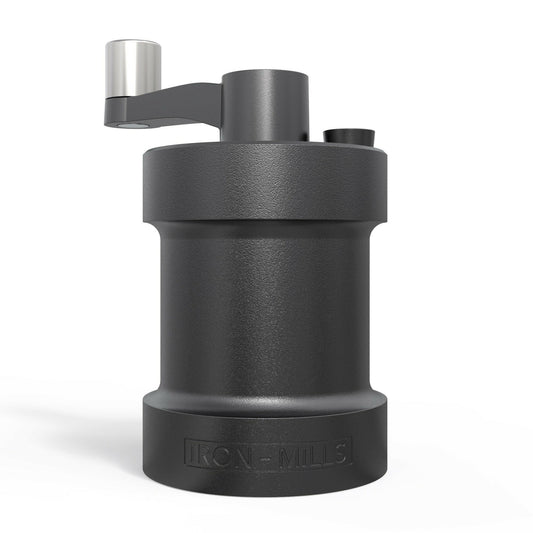
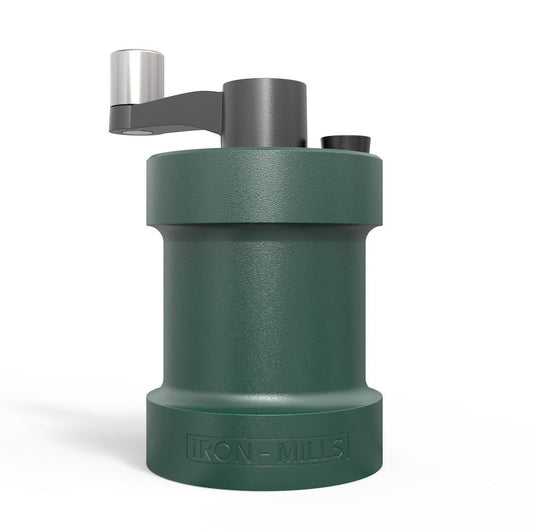
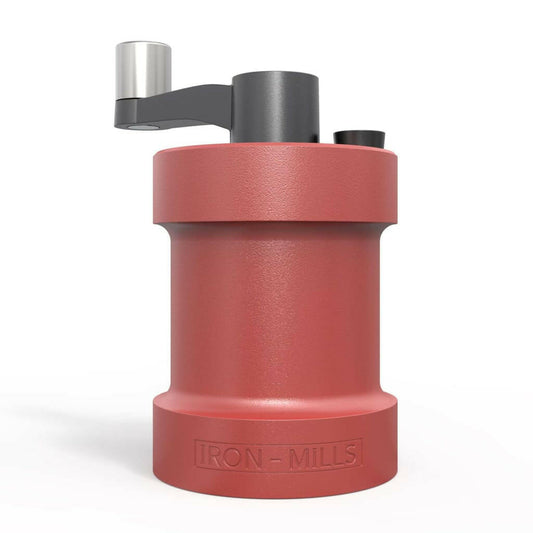
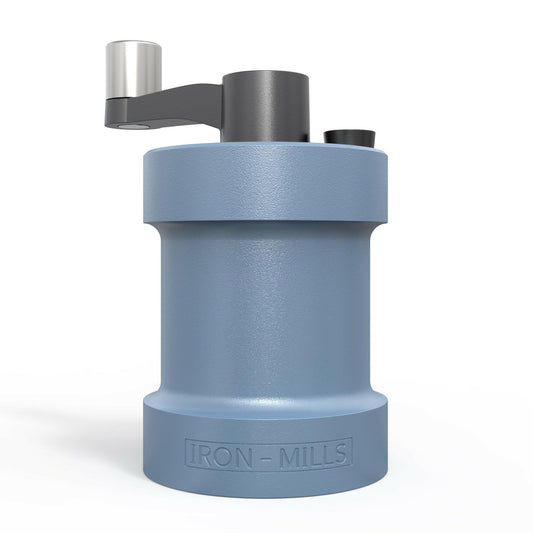
It is also worth choosing the tool to suit the job. A cheap mill can be an expensive habit when it fails every year, leaves grit in your food or demands constant replacement. A substantial cast iron mill with a dependable mechanism is made for daily handling, not occasional use before it gives up. Iron-Mills are built in Britain for precisely that sort of long-term kitchen work, with the weight, material quality and 10-year warranty that make a mill feel like a proper utensil rather than a disposable accessory.
When a stuck grinder needs replacing
Not every jam deserves a repair. If the body is cracked, the spindle spins without grinding, the mechanism is visibly corroded, or the adjustment will no longer hold its position, replacement is usually the sensible option. The same applies if the mill repeatedly jams with dry, suitable seasoning and careful use.
A mill should make cooking easier. It should sit solidly in the hand, produce an even grind and cope with the ordinary rhythm of weekday suppers, Sunday roasts and a table full of guests. If yours needs constant coaxing, it has stopped earning its place on the worktop.
Treat a jam as useful information: dry the contents, clear the mechanism, check the setting and consider whether the mill itself is built for the years of use you expect from it. The best replacement is not merely one that turns today, but one you will still trust to season dinner a decade from now.