How Long Should a Pepper Grinder Last?
If you are asking how long should a pepper grinder last, there is usually a reason. The grind has turned uneven, the mechanism sticks, the body feels loose, or the whole thing has begun to seem like another kitchen item built to be replaced far too soon. A decent pepper mill should not give up after a few months of ordinary cooking. With proper materials and sensible care, it should serve reliably for years.
That is the short answer. The more useful answer is that lifespan depends less on how often you cook and more on how the grinder is made. A well-built pepper mill used daily can last many years. A cheaply made one may struggle before the first refill is finished.
How long should a pepper grinder last in real use?
For a quality pepper grinder, a realistic expectation is five to ten years at the very least, and often longer. In many kitchens, a properly made mill will keep going well beyond that if the grinding mechanism is strong and the body is built from durable materials.
By contrast, low-cost grinders often begin to fail within a year or two, sometimes much sooner. That failure does not always mean the grinder stops completely. More often, performance slips first. The grind becomes inconsistent, the adjustment setting will not hold, the top loosens, or the mechanism starts crushing rather than properly grinding the peppercorns.
That distinction matters. A pepper mill can still appear functional while doing a poor job. If it takes twice as many turns to season a pan, or if it throws out dust one moment and large fragments the next, it is no longer doing what it should.
What actually determines how long a pepper grinder lasts?
The grinding mechanism matters most. This is the working heart of the mill, and it takes all the strain. If the mechanism is made from weak plastic or low-grade metal, regular use will wear it down quickly. Teeth blunt, fittings loosen, and the action becomes rough.
A sturdier mechanism keeps its edge and its alignment. That means a more consistent grind and far less frustration over time. Peppercorns are small, but they are hard. Every twist places force through the same parts again and again. Poor construction shows up quickly.
Material choice in the body matters too. Lightweight acrylic and thin wood can crack, warp or work loose around the fittings. Heavier, more solid construction tends to hold up better to everyday handling, kitchen heat, and repeated refilling. This is one reason premium mills feel different in the hand. The weight is not just for show. It often reflects a more durable build.
Design also plays a part. If a grinder is awkward to refill, difficult to clean, or fiddly to adjust, people tend to force it. Forced parts wear faster. Good design reduces strain on both the product and the user.
Signs your pepper grinder is wearing out
A tired pepper mill usually gives warnings before it fails outright. The first is inconsistent grind size. You set it coarse, but it still throws out powder. Or you tighten it for a finer grind and get random chunks. That usually points to wear in the mechanism or a problem with the adjustment system.
Another sign is resistance that feels wrong. A solid grinder should offer firm, controlled movement. If it becomes jerky, squeaky, or suddenly stiff, something is not right. Equally, if the action turns slack and hollow, internal parts may be wearing down.
You may also notice pepper dust collecting where it should not, or the grinder shedding small bits of material. That is never a good sign. Loose components, wobbly tops, and visible corrosion are all indications that the mill is moving beyond normal wear and into decline.
Daily use does not ruin a good mill
People often assume heavy use is what shortens the life of a pepper grinder. Not necessarily. Daily use should be expected. A proper mill is a working kitchen tool, not something to be kept on a shelf for appearances.
What shortens lifespan is poor manufacturing paired with regular strain. If the mechanism was never strong enough to begin with, everyday cooking simply exposes the weakness sooner. In a well-made grinder, routine use helps prove its worth. That is exactly what it was built for.
There is a difference, though, between ordinary use and misuse. Grinding damp peppercorns, storing the mill beside steam, or forcing jammed parts will put stress on any mechanism. Even a premium grinder benefits from basic care.
How to make a pepper grinder last longer
The first rule is simple: keep it dry. Pepper mills do not get on well with moisture. Damp peppercorns can clump inside the mechanism, and humid storage conditions can encourage corrosion in lower-grade components. If your mill lives beside the hob, move it a little farther from steam and splashes.
Refill it properly rather than overfilling. Cramming in too many peppercorns can interfere with smooth movement, especially if the grinder was not designed with much internal clearance. It is also worth using good-quality, dry peppercorns of a sensible size. Very cheap peppercorns can contain fragments and dust that do the mechanism no favours.
Cleaning should be light and sensible. Most pepper grinders do not need washing. In fact, soaking them is a quick route to damage. A dry cloth on the outside and an occasional emptying of old residue is usually enough. If the mechanism seems clogged, a small amount of dry rice is sometimes suggested for cleaning, but not every grinder is suited to that approach. The safer rule is to follow the maker's care advice and avoid improvising with anything abrasive.
Cheap mills versus well-made mills
This is where expectations often go wrong. Many people have owned disposable or supermarket grinders that worked acceptably for a short while, then began to fail. Once you have had two or three of those, it is easy to assume pepper grinders simply do not last.
That is not the full picture. Cheap mills are often built to meet a price point, not a lifespan. Thin casings, weak fittings, and low-grade grinding parts keep the cost down, but they also limit durability. You may save money at the till and spend more over time replacing them.
A better pepper grinder costs more because it is made differently. Stronger materials, more precise construction, and a reliable grinding mechanism all raise the standard. The initial spend is higher, but so is the return in daily use. Instead of tolerating a grinder that works badly, you get one that feels dependable every time you season a meal.
For buyers who care about durability, this is the real question behind how long should a pepper grinder last. Not whether a mill can grind pepper today, but whether it will still do it properly years from now.
When should you replace a pepper grinder?
Replacement is sensible when performance has clearly deteriorated and cannot be put right by cleaning, refilling, or simple adjustment. If the mechanism has worn down, if parts no longer hold securely, or if the body is damaged, the grinder has reached the end of its useful life.
That said, not every problem means the whole mill is finished. Sometimes a loose fitting can be tightened, old pepper residue can be cleared, or an adjustment issue can be corrected in seconds. It is worth checking before assuming the worst.
The more important point is this: you should not have to replace a pepper grinder regularly. If that has become normal in your kitchen, the grinder itself is the problem.
What to look for if you want one that lasts
Start with construction. Choose a mill that feels solid and purposeful rather than flimsy. Pay attention to the mechanism, because that is where longevity lives or dies. Look for reassurance around build quality, warranty, and where the product is made.
A long warranty does not guarantee perfection, but it does tell you something about the maker's confidence. Brands that build for long-term use tend to stand behind what they sell. That matters, especially in a category crowded with throwaway options.
For many home cooks, a pepper mill is used every day and noticed only when it stops working properly. That is exactly why quality matters. The best kitchen tools become part of the routine without becoming a nuisance. They do their job, hold their standard, and stay in service.
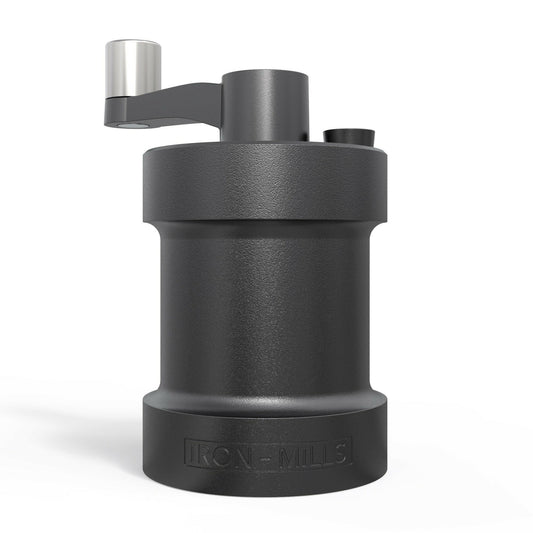
A well-made mill from a brand such as Iron-Mills should feel like that from the start - solid in the hand, consistent in use, and built for the long haul.
If your current grinder is already slipping, sticking, or scattering pepper unevenly, do not write it off as normal wear for the category. A pepper grinder should last years, not seasons. Buy once with care, and it becomes one of those rare kitchen pieces you stop thinking about because it simply keeps working.