Salt Grinder Buying Guide for Lasting Use
A salt mill usually earns attention only when it starts to fail. The mechanism jams, the grind turns patchy, or the body cracks after a few months on the worktop. That is exactly why a proper salt grinder buying guide matters. If you cook regularly, season with intent and want tools that feel as good in the hand as they perform over time, the right mill is not a small detail. It is part of how your kitchen works every day.
Cheap grinders tend to promise convenience and deliver short service. They are often treated as throwaway items, which is poor value however low the initial price. A well-made salt mill should give you control, consistency and the sort of durability that makes replacement an afterthought rather than a routine.
What a good salt mill should actually do
At its simplest, a salt grinder should crush salt cleanly and consistently. That sounds obvious, but it is where many products fall short. Good seasoning depends on even distribution. If one turn produces dust and the next drops out oversized chunks, your food suffers for it.
A decent mill should also feel stable in the hand, turn without strain and cope with regular use. If you cook most evenings, your grinder is not a decorative extra. It is a working kitchen tool. That means the mechanism needs to stay reliable, the body needs to resist wear, and the adjustment should remain predictable rather than drifting over time.
Design matters too, though not only in the visual sense. Shape, weight and balance all affect daily use. A handsome mill that feels awkward or flimsy soon loses its appeal.
Salt grinder buying guide: start with the grinding mechanism
If there is one area worth taking seriously, it is the mechanism. Salt is corrosive, so the internal grinding parts need to be suited to that environment. A mill built with the wrong materials may look fine on the shelf and begin degrading sooner than expected.
For salt, ceramic mechanisms are common because they resist corrosion well. Some high-grade engineered systems are also designed specifically for salt and built for sustained performance. What matters is not the marketing phrase on the box, but whether the mechanism is intended for salt rather than treated as an afterthought.
This is also where grind consistency lives or dies. A strong mechanism gives you a more even output and better control across fine to coarse settings. If you like a finer grind for chips and roasted vegetables but a coarser finish for steaks or tomatoes, the adjustment should be easy to manage and easy to trust.
Be wary of mills that feel gritty, overly loose or weak when turned. They rarely improve with age.
Material quality is not a luxury
There is a habit in kitchenware marketing of calling anything heavy or dark-coloured "premium". Real material quality is less about appearance and more about how the mill behaves after months and years of use.
Plastic-bodied grinders are light and inexpensive, but that usually comes with compromise. They can feel hollow, wear quickly around threaded parts and lack the reassuring stability many cooks prefer. Timber can be attractive and warm in the hand, though quality varies significantly. Poor finishing, soft woods or weak internal fittings can let down an otherwise decent design.
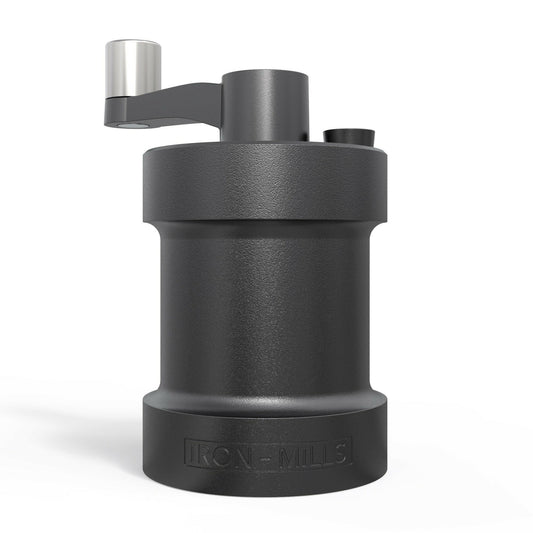
Cast iron and other substantial metals bring obvious advantages if properly made. They have weight, strength and real presence on the worktop. More importantly, they tend to suit buyers who are tired of replacing kitchen tools that were never built for the long haul. A solid body does not guarantee a good grinder on its own, but it is often a sign that the maker has durability in mind rather than simply chasing a lower price point.
That is the trade-off in plain terms. Lighter and cheaper may be enough for occasional use. If you cook often and expect your tools to keep pace, better materials usually justify themselves.
Size, capacity and who the mill is really for
A compact grinder can make sense if you have a smaller kitchen, season lightly or want something neat for the dining table. A larger mill tends to suit serious home cooks better, particularly if you reach for salt throughout prep as well as at the finish.
Capacity is part convenience, part practicality. A small chamber means more frequent refilling, which can become tiresome. A larger one reduces fuss, but only if the mill remains comfortable to handle. There is no single perfect size. It depends on how you cook, how often you use it and whether the mill will live by the hob, on the table or both.
If the grinder is intended as a gift, size becomes a style question too. Some buyers want a statement piece with substance. Others want something understated that suits a modern kitchen without dominating the space.
Ease of refilling should not be overlooked
A surprising number of mills make refilling more awkward than it needs to be. Narrow openings, fiddly screws and poorly fitting tops all turn a simple task into a nuisance.
Look for a design that opens cleanly and allows salt to be poured in without making a mess across the counter. The closure should feel secure once reassembled, with no wobble or uncertainty. If you are buying for long-term use, this small detail matters more than many people expect. Everyday frustration has a way of making even an expensive purchase feel ill judged.
The type of salt you plan to use matters as well. Most mills are best with dry, coarse salt crystals rather than damp or heavily flavoured blends. If you prefer specialist salts, check that the mechanism and chamber are suitable. A grinder should match your cooking habits, not force you to change them.
Why grind settings matter more than people think
One of the clearest differences between a mediocre mill and a good one is the adjustment. Fine salt behaves differently in cooking than coarse salt. A finer grind disperses quickly and gives you more control in sauces, soups and baking prep. A coarser grind brings crunch, texture and visual finish at the table.
A useful mill should let you move between these settings with confidence. Some do this with a simple top adjustment, others with a more concealed system. Either can work, provided the setting stays in place and produces a noticeable difference in output.
If a grinder claims multiple settings but all of them feel roughly the same, you are paying for a feature in name only. Reliable adjustment is one of those details that separates a proper kitchen tool from a decorative object.
The feel in the hand tells you a lot
You can learn a great deal from how a mill feels before a single grain is ground. Does it sit comfortably in the hand? Does the turning action feel smooth and controlled? Is the weight reassuring or merely cumbersome?
A well-balanced grinder should feel substantial without becoming tiring. That balance is especially important for anyone with reduced grip strength or who cooks in larger batches. Very heavy mills are not automatically better. Nor are ultra-light mills automatically poor. The question is whether the design feels deliberate.
This is where craftsmanship shows. Tight fittings, clean finishing and a steady action speak louder than flashy claims on packaging ever will.
Salt grinder buying guide: price, value and longevity
Price always matters, but the better question is what you are paying for. A bargain grinder that lasts six months is rarely a bargain. A more expensive mill that performs properly for years often works out cheaper in the end, not to mention less irritating.
Value in this category comes from three things: dependable performance, durable construction and confidence in the maker. Warranty length can be a useful signal here. So can clear manufacturing standards and honest information about materials. Brands that build for longevity tend to say so plainly.
This is particularly relevant if you are buying a salt mill as a gift. People remember gifts that feel substantial and keep proving their worth. They also remember the ones that stop working by Boxing Day.
For buyers who want proper kitchenware rather than another disposable gadget, paying more upfront can be the sensible move. That is not about extravagance. It is about buying once and buying well.
Style still matters, just not on its own
Your salt mill will probably stay visible, so of course style matters. Whether your kitchen leans traditional, industrial or clean-lined contemporary, the grinder should look at home there.
But appearance should follow function, not cover for its absence. Plenty of mills are designed to look smart in photographs and feel disappointing in use. The best ones manage both - they have character, presence and practical strength.
If British-made craftsmanship matters to you, that can be part of the decision as well. There is real appeal in owning a kitchen tool built with a sense of permanence rather than planned replacement. For many buyers, that connection between heritage, material quality and daily function is exactly the point.
Tired of cheap mills that do not last? Then be selective. Choose a salt grinder that treats durability as the starting point, not a bonus feature. A good one should earn its place every day, from the first pinch over supper to the hundredth Sunday roast after that.