Why Do Pepper Grinders Jam So Often?
One twist and nothing happens. Or worse, the handle turns, the top creaks, and only a sad dusting of pepper lands on your dinner. If you've been asking why do pepper grinders jam, the answer is usually not bad luck. It is almost always a mix of moisture, poor build quality, the wrong peppercorns, or a grinder mechanism that was never made for long-term daily use.
A good pepper mill should feel dependable in the hand and deliver a consistent grind without fuss. When it starts sticking, clogging or locking up altogether, something in that chain has gone wrong. The trouble is that many people blame the pepper itself when the real problem sits in the design, the materials, or the way the mill is being used.
Why do pepper grinders jam in the first place?
Pepper grinders jam because they rely on close contact between moving parts. The grinding mechanism has to grip, crack and crush hard peppercorns while keeping a steady gap for the chosen grind size. If fragments build up, if moisture gets in, or if the mechanism wears down, that gap stops behaving as it should.
Cheap mills tend to suffer first. A weak spindle, soft internal parts or a flimsy housing can shift under pressure. That means peppercorns stop feeding properly into the burrs or grinding teeth. Instead of a clean crush, you get bridging, clogging or complete seizure.
There is also a simple truth here. Peppercorns are hard. Grinding them repeatedly puts real stress on the mill. If the grinder is made from poor materials, it will not take that punishment for long.
Moisture is one of the biggest culprits
Pepper should be dry when it enters the mill and stay dry while stored there. That sounds obvious, but in a busy kitchen it is easily overlooked. Steam from a pan, damp hands, or storing the grinder near the hob can all introduce enough moisture to cause trouble.
Once moisture gets inside, ground pepper can cling to the mechanism and form a stubborn residue. Fine particles stick together, fresh peppercorns stop feeding cleanly, and the burrs struggle to move freely. What starts as a slightly stiff turn can become a proper jam.
This is why a grinder may work badly after cooking but seem a bit better later on. The moisture shifts the texture of the pepper inside. It is not always a mechanical failure at first, but it often becomes one if the problem continues.
The peppercorns matter more than people think
Not all peppercorns behave in the same way. Good quality, properly dried black peppercorns are generally reliable. But oversized, soft, stale or uneven peppercorns can cause feeding problems, especially in mills with less precise mechanisms.
Pink peppercorns are a common offender. They are softer, higher in oil, and not suited to many standard pepper mills. The same goes for blends that include dried berries or other spices. They may look attractive in a jar, but they can gum up the works very quickly.
Very old peppercorns can also cause trouble. If they have absorbed moisture from the air or lost their firmness, they do not fracture in the clean, crisp way a grinder expects. Instead, they can crush unevenly and leave more residue behind.
Grind setting plays a part
If your pepper grinder jams when set very fine, that is not unusual. A tighter setting reduces the gap between the grinding surfaces. That gives a finer result, but it also leaves less room for pepper dust and broken fragments to pass through.
In a well-made mill, this should still work properly. But even strong mechanisms need a bit of common sense. If the grinder is overfilled, packed with inconsistent peppercorns, or already carrying a bit of residue, a very fine setting can tip it over into clogging.
On the other hand, if the setting is too loose, peppercorns may not catch properly. You turn and turn, but the burrs fail to grip. That can feel like a jam when the real issue is poor adjustment or worn parts.
Wear and poor construction cause repeat jamming
A pepper mill is one of those kitchen tools that reveals its quality over time. On the shelf, many look decent enough. After months of use, the difference becomes obvious.
If the internal mechanism is made from weak metal, brittle plastic or low-grade components, it can lose alignment. The spindle may wobble. The burrs may wear unevenly. The housing may flex under pressure. All of that leads to inconsistent grinding and regular jamming.
This is where material choice matters. A sturdy body and a properly engineered mechanism are not luxuries. They are what keep a mill working under real kitchen conditions, day after day. Durable mills cost more for a reason. They are built to cope with the job instead of merely surviving it for a season.
How to fix a jammed pepper grinder
First, empty the grinder. Tip out the peppercorns and inspect what is inside. If you can see fine dust, oily residue or clumped fragments, that is often the source of the problem.
Next, adjust the mill to a coarser setting. A jammed grinder sometimes frees itself when the grinding gap is widened. Turn it gently rather than forcing it. If it suddenly gives way, clean it before refilling. Powering through a blockage can damage the mechanism.
If the grinder allows access to the grinding parts, use a dry brush or cloth to remove trapped pepper. Avoid water unless the manufacturer specifically says it is safe. Moisture usually caused the problem in the first place, and introducing more can make matters worse.
For stubborn residue, a few dry grains of uncooked rice can sometimes help dislodge debris in suitable grinders, but this depends on the mechanism. It is not a cure-all. On a poorly built mill, improvised fixes often reveal that the internal parts are already wearing out.
How to stop it happening again
Prevention is mostly about storage, filling and choosing a mill that is properly made. Keep the grinder away from direct steam and never hold it over a boiling pan while grinding. That habit is convenient, but it sends warm moisture straight into the mechanism.
Refill with clean, dry black peppercorns of a sensible size. Do not overpack the chamber. Peppercorns need room to move and feed into the grinder. If your mill starts feeling stiff, deal with it early. A quick clean is far better than waiting for a full blockage.
It also pays to use the right tool for the ingredient. Salt mills and pepper mills are not interchangeable. Salt attracts moisture and can corrode unsuitable mechanisms. Pepper releases natural oils and needs components designed to cope with abrasion. A mill built for pepper should be dedicated to pepper.
Why better mills jam less
A properly made pepper mill is not immune to misuse, but it is far less likely to fail under normal cooking conditions. Stronger materials hold alignment. Better grinding mechanisms crack peppercorns cleanly. A well-balanced adjustment system gives you control without making the mill temperamental.
That is the difference between buying once and buying repeatedly. Many people put up with sticking grinders because they assume all mills are much the same. They are not. Build quality changes the daily experience in very practical ways - smoother grinding, fewer blockages, and a consistent result on the plate.
For cooks who use seasoning properly, that reliability matters. Pepper is not an afterthought. It is part of how flavour is built. If the mill lets you down, the whole thing becomes needlessly irritating.
When it is time to replace rather than repair
Some jams are simple maintenance issues. Others are a sign that the grinder has reached the end of the road. If the mechanism keeps sticking despite cleaning, if the adjustment no longer holds, or if internal parts are visibly worn, replacement is usually the sensible option.
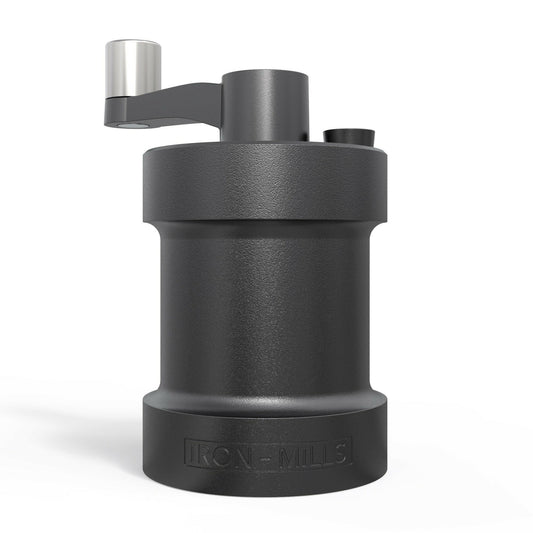
A decent pepper mill should earn its place in the kitchen for years, not months. That is why many home cooks eventually move away from throwaway grinders and towards something more substantial. Iron-Mills is built around that very idea - kitchen tools should work hard, feel solid, and keep doing the job properly.
If your current grinder is forever clogging, squeaking or grinding unevenly, the issue may not be your peppercorns or your technique. It may simply be a mill that was never built to last.
The good news is that pepper grinders do not jam without a reason. Once you know what causes the trouble, you can usually fix it, prevent it, or choose a better mill and leave the problem behind for good.