Ceramic Versus Steel Grinding Mechanisms
A pepper mill that produces dust one week and coarse, uneven chunks the next is not a minor kitchen annoyance. It changes the way food tastes, and it is usually a sign that the grinder inside was never made for regular use. When weighing up ceramic versus steel grinding mechanisms, the right answer depends on what you are grinding, how you cook and whether you want a mill for a season or for years.
The mechanism does the hard work. It determines how consistently your pepper is cracked, whether salt clogs the works and how well the mill holds its setting. The outer body may be handsome and substantial, but it is the grinder that earns its place beside the hob.
Ceramic versus steel grinding mechanisms: the real difference
Ceramic and steel mechanisms both use hard, shaped surfaces to crush seasoning as the mill is turned. Their performance differs because the materials respond differently to moisture, friction and everyday wear.
Ceramic is extremely hard and does not rust. That makes it a popular choice for salt mills, particularly where the mill may encounter damp hands, steam from a saucepan or a humid kitchen. Salt is corrosive by nature, so a material that is unaffected by oxidation has an obvious advantage.
Steel mechanisms are valued for their strength, precise cutting edges and reassuringly solid feel. A well-made steel grinder can deliver a clean, consistent crack through whole peppercorns, creating properly sized pieces rather than a mixture of powder and large fragments. For black pepper, steel is often the professional choice.
But material alone does not settle the matter. The grade of steel, the design of the teeth, the fit of the moving parts and the adjustment mechanism all matter. A cheap steel grinder can corrode or blunt. A poorly designed ceramic grinder can chip, bind or struggle with particularly hard spices. Good mills are built around the job they are intended to do.
Why pepper often suits a steel mechanism
Peppercorns are hard, dry and oily. They need to be cracked decisively, not merely rubbed into powder. A quality steel mechanism has sharp, durable teeth that grip the peppercorn, break it down and move it through the grinder in a controlled way.
That control is what gives fresh pepper its advantage. At a fine setting, you want a light, even seasoning for sauces, eggs or a finishing touch over grilled fish. At a coarser setting, you want clearly defined pieces that bring warmth and texture to a steak, roast vegetables or a proper cacio e pepe. If the mechanism cannot maintain an even gap, every setting becomes a compromise.
Steel is also well suited to the repeated force involved in grinding pepper. It is tough, stable and capable of retaining its shape over long periods when properly specified. That matters if your mill is used every day rather than brought out only for the dinner table.
Not all steel is equally suited to kitchen use. Stainless steel offers better corrosion resistance than untreated carbon steel, although salt and moisture should still be kept away from any pepper mechanism. A mill designed for pepper should be kept dry and filled with dry, whole peppercorns. Pre-ground pepper is not a substitute: it has already lost much of the fragrant oil a good mill is meant to release.
Steel does not mean indestructible
A steel mechanism needs sensible care. Do not rinse the grinding head under the tap, and do not fill it with wet seasoning. Wipe the exterior with a lightly damp cloth, then dry it thoroughly. If peppercorns have become stale or dusty, empty the mill and brush the mechanism carefully rather than introducing water.
This is not high maintenance. It is simply the level of care you would give any properly made kitchen tool. A mill built for the long haul should not be treated as disposable.
Why ceramic is a sensible choice for salt
Salt presents a different challenge. Even when it appears dry, salt naturally attracts moisture from the air. That moisture can cause corrosion in unsuitable metals and can turn loose grains into a compacted mass inside a grinder.
Ceramic does not rust, which is why it is widely used for salt. Its hard grinding surfaces cope well with dry sea salt, rock salt and many other salt crystals. It is also generally neutral in use, so it will not affect the flavour of the seasoning.
For an everyday salt mill, ceramic offers welcome peace of mind. You can season a pan at the cooker, pass the mill around a busy table and use it without worrying that normal kitchen humidity will quickly ruin the internal parts.
There are limits. Ceramic is hard, but hardness is not the same as toughness. If dropped onto a stone floor, ceramic components can be more vulnerable to chipping than steel. It may also be less suitable for ingredients beyond its intended purpose, especially very hard spices or mixed seasonings containing oily, sticky ingredients.
Use the right salt, too. Dry, food-grade crystals are the safe choice. Wet sea salt, flavoured salts with oils and salt that has formed large damp clumps can cause any mechanism to jam. The problem may not be the ceramic at all; it may be what has been put into the mill.
Grind consistency matters more than most people think
A grinder should give you a choice, not a gamble. The adjustment should move from fine to coarse with a clear effect, and it should stay where you set it. Fine salt for baking and coarse salt for a crust on a joint of beef are different jobs. So are a fine pepper finish for soup and a coarse crack over tomatoes and mozzarella.
In the ceramic versus steel grinding mechanisms debate, consistency is where good engineering separates itself from a bargain mill. The best material in a loose, badly aligned mechanism will disappoint. Equally, a sound mechanism housed in a flimsy body can become awkward to turn, difficult to refill or prone to damage when knocked over.
Look for a mill with a positive, smooth action and an adjustment that does not drift as you use it. The turning action should feel controlled, not stiff, scratchy or hollow. A substantial body helps here, providing the grip and stability needed to grind without wrestling with the thing.
Choose the mechanism for the seasoning, not the sales pitch
If you are buying separate mills, the straightforward approach is usually steel for pepper and ceramic for salt. It is a practical pairing based on the strengths of each material, not a marketing trick.
If you are choosing a single grinder for a particular seasoning, start with the ingredient. Dry peppercorns favour a precision steel mechanism. Dry salt benefits from corrosion-resistant ceramic. For spices such as coriander, cumin or allspice, check the manufacturer's intended use rather than assuming either mechanism will cope. Spice hardness, oil content and seed size vary considerably.
Be wary of mills advertised simply as having a “ceramic core” or “metal grinder” with no detail about use, adjustment or care. Vague language often hides a basic component. A serious millmaker should be clear about what the mechanism is designed to grind and why.
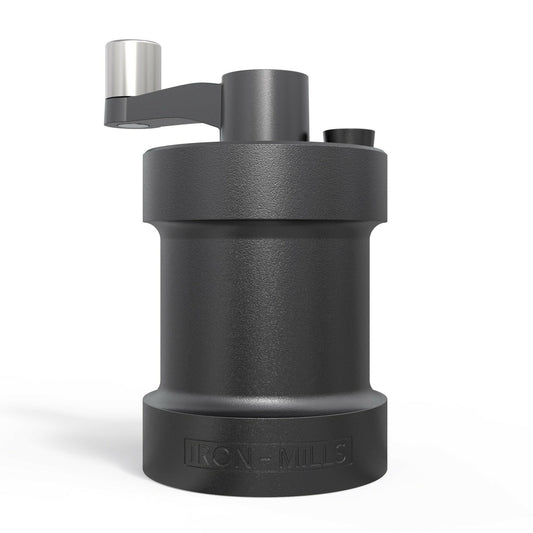
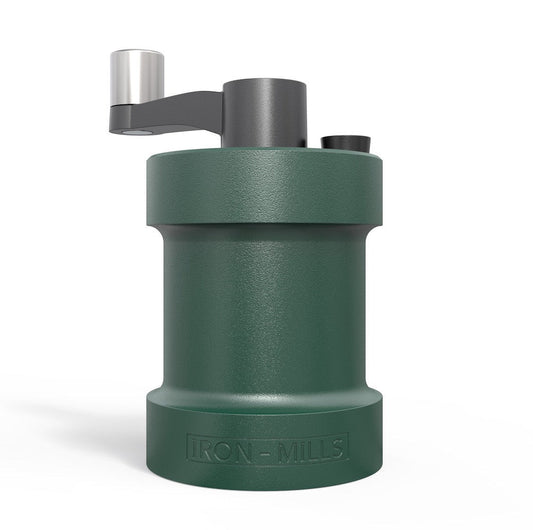
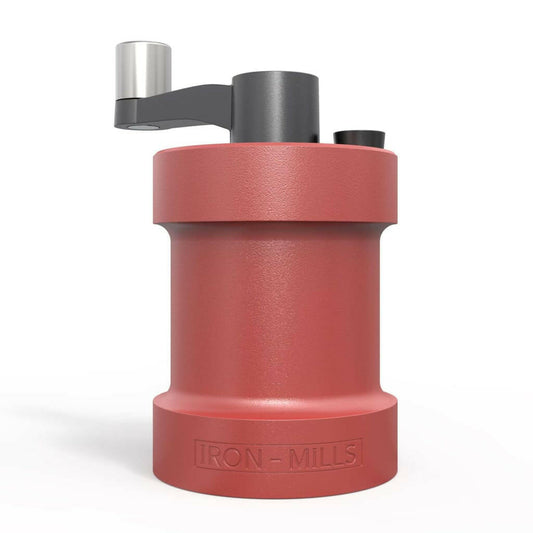
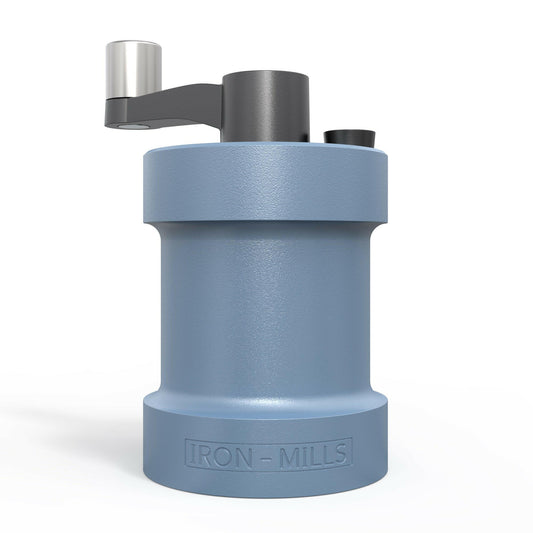
The same principle applies to the rest of the mill. A heavy, well-balanced piece such as an Iron-Mills cast iron mill is made for the daily handling that lesser grinders often fail to withstand. Good materials should work together: a dependable body, a purposeful mechanism and a design that remains satisfying to use long after the novelty has gone.
How to make any quality mill last
Keep salt and pepper in their own dedicated mills. Empty and clean a mill before changing seasoning, because leftover grains can affect both flavour and performance. Refill before the mechanism runs completely dry, as a nearly empty mill can feel rougher and make it harder to judge the grind.
Store mills away from direct steam where possible. Leaving one immediately beside a boiling kettle or over a constantly simmering pan invites moisture into the grinder. At the table or on a worktop, a dry position is enough.
Finally, do not force a jammed grinder. Remove the seasoning, inspect for damp clumps or an oversized piece, and clean it according to the maker's instructions. Applying more force can damage the mechanism that was meant to last.
A good salt or pepper mill should make seasoning feel effortless: one turn, the right grind, exactly where you need it. Choose ceramic or steel for the ingredient in hand, then choose a mill built well enough to prove that choice worthwhile every day.