What Salt Works in a Salt Mill? Best Types
A good salt mill should give you a clean, confident crack of seasoning over a roast, a salad or a pan of chips. If it suddenly stiffens, produces dust or refuses to turn, the mill is often not the problem. The salt is. Knowing what salt works in a salt mill means choosing crystals that are dry, suitably sized and ready to grind - not simply using whatever is nearest the hob.
What Salt Works in a Salt Mill?
The best choice is dry, coarse salt crystals made for grinding. Coarse sea salt is the dependable all-round option for most salt mills. Its crystals are hard enough to be crushed evenly, large enough for the mechanism to grip, and readily available in food shops across the UK.
Look for a product described as coarse sea salt, grinder salt, salt crystals or refill salt. The exact crystal size can vary between brands, but it should resemble small, dry grains rather than powder or delicate flakes. When poured into the mill, the salt should flow freely rather than cling to the packet or form lumps.
A proper mill is designed to add seasoning at the point of cooking or serving. Coarse crystals allow you to adjust the grind from a fine sprinkle to a bolder finish, giving you more control over both texture and saltiness. That is the point of owning a mill rather than shaking salt from a pot.
The Best Salts for Everyday Grinding
Coarse sea salt
For most kitchens, coarse sea salt is the sensible choice. It has a clean, straightforward flavour and consistent crystals that suit regular use. Use it over everyday suppers, Sunday roasts and vegetables straight from the oven. It does the job without fuss.
Sea salt also comes in different levels of refinement. A lightly refined coarse sea salt tends to offer the most reliable flow through a mill. Less refined varieties can bring subtle mineral notes and a more natural appearance, although the variation in crystal size may be greater. Neither is automatically better - choose the flavour and finish you enjoy, provided the salt is thoroughly dry.
Coarse rock salt
Food-grade coarse rock salt can also work well, especially where the crystals are uniform and dry. It usually has a firmer, more angular grain than sea salt, which many mills handle without difficulty. Check the packet carefully: salt sold for paths, water softeners or other household purposes is not food and must never go near your seasoning mill.
Rock salt crystals can sometimes be larger than a mill is designed to take. If they will not pass easily through the opening, do not force them in or try to crush them with the mechanism. Choose a smaller food-grade crystal instead.
Himalayan pink salt
Himalayan pink salt is a popular option for people who enjoy its warm colour and mild mineral character. Coarse, dry Himalayan salt can be used in a salt mill, as long as the crystals are sized appropriately for the model. It makes a handsome table salt and gives a pale pink finish on food.
There is a practical trade-off. Some pink salt crystals are notably hard and irregular, while others arrive with a mixture of fine dust and larger pieces. Buy a quality culinary grade, sieve out excess powder if necessary, and avoid overfilling the mill. A well-made mechanism should feel smooth, not strained.
Salt That Causes Trouble in a Mill
Not every salt belongs in a grinder. The issue is usually moisture, softness or crystal shape.
Fine table salt is too small to give the controlled, freshly ground result people expect from a mill. It may pass through too quickly, create an uneven output or settle into compacted areas. It is better kept in a salt cellar or shaker.
Salt flakes, including delicate sea salt flakes, are best used by hand. Their light, fragile structure is part of their appeal. Grinding them destroys that texture and can leave fragments trapped in the mechanism. Save flakes for finishing steaks, tomatoes, buttered radishes or a good loaf of bread.
Wet sea salt is another poor fit. It may taste excellent, but moisture causes crystals to clump together. Once moisture gets inside a mill, it can lead to sticking and inconsistent grinding. In mills with metal components, prolonged exposure to damp salt can also encourage corrosion.
Avoid scented salts, smoked salts or blends containing herbs, garlic, chilli or other flavourings unless the manufacturer specifically says they are suitable for a mill. Oils and fine ingredients can coat the grinding mechanism. A seasoning blend may be delicious, but it is not worth turning a dependable kitchen tool into a blocked one.
Dryness Matters More Than You Might Think
Salt attracts moisture from the air. Leave an open packet beside a steaming pan, and even good coarse crystals can begin to clump. The problem is especially common in kitchens where the mill sits close to the cooker, kettle or dishwasher.
Keep refill salt in a tightly sealed container in a cool, dry cupboard. Refill your mill away from steam and make sure the inside is completely dry before adding fresh crystals. If you have washed the mill's body or wiped it down after a spill, allow it to dry fully first. Water and salt are a poor combination for any precision grinding mechanism.
If your salt has already formed lumps, do not put it in the mill hoping it will break apart. Spread it on a tray and allow it to dry thoroughly, or replace it with fresh crystals. Salt is inexpensive. A reliable mill is worth looking after.
How to Choose the Right Crystal Size
A salt mill does not need the largest crystal you can find. It needs a size that moves freely into the grinding mechanism. Very large chunks may jam before they reach the grinder, while overly fine grains can reduce control and produce a weak, dusty flow.
As a rule, choose coarse crystals sold specifically for culinary grinding. If you are trying a new salt, add a small amount first and test the mill over a plate. It should turn with steady resistance and produce an even scatter of salt. Grinding should feel solid and controlled, never gritty, crunchy or forced.
Your preferred setting matters too. A fine setting works well for sauces, soups and everyday cooking, where salt needs to dissolve quickly. A coarser setting suits grilled meat, roasted vegetables and table seasoning, where you want the occasional bright crunch. The salt should be capable of both, but the mechanism determines how consistently it delivers them.
Refilling a Salt Mill Without the Mess
Refill before the mill is completely empty if you can. This lets you spot any fine salt dust collecting at the bottom and clean it out before it builds up. Use a dry funnel or a folded piece of clean paper to guide the crystals in, then avoid filling right to the brim. A little space helps the salt move freely.
Do not mix old, damp remnants with a fresh refill. Empty the mill, brush away loose residue with a dry brush or cloth, and refill with new dry salt. Never rinse the grinding mechanism unless the care instructions explicitly allow it. For most mills, dry cleaning is the safer route.
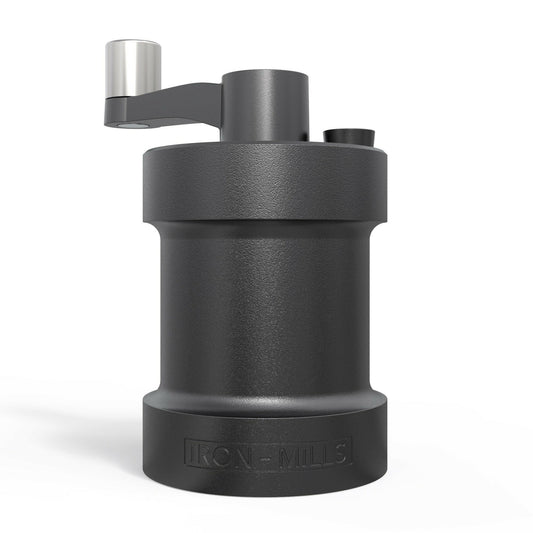
A cast iron mill deserves the same practical care as any lasting kitchen tool: keep it dry, use it properly and do not ask it to grind ingredients it was never built to handle. Iron-Mills are made for everyday seasoning with a substantial feel in the hand, but good ingredients and sensible maintenance remain part of the bargain.
A Simple Rule for Better Seasoning
Choose dry, coarse, food-grade salt crystals and your mill will do what it should: deliver fresh seasoning exactly when the dish needs it. Keep flakes for finishing by hand, keep wet salt out of the mechanism, and keep your refill salt away from steam. A small decision at the cupboard makes every turn of the mill more dependable - and every meal better seasoned.