Which Mills for Flaky Sea Salt Actually Work?
A good pinch of flaky sea salt has a job to do. It adds a crisp burst of salinity, a little texture and a finish that makes simple food taste considered. That is precisely why mills for flaky sea salt are not always the answer. A mill is made to crush seasoning into a controlled grind, while a flake is made to be noticed whole.
If you have ever filled a grinder with delicate salt flakes only to find it clogging, turning unevenly or producing dust, the problem is not necessarily the mill. It is the mismatch between the salt and the tool. Here is how to choose the right setup for the salt you use, without filling the kitchen with another gadget that does not earn its place.
Why flaky sea salt behaves differently
Flaky sea salt is formed in thin, irregular crystals. Unlike the compact grains used in everyday table salt, these crystals are light, fragile and often broad. They crush with very little pressure, which is part of their appeal when scattered over a steak, a roast tomato salad or a piece of warm chocolate cake.
Inside a mill, however, that same delicacy can cause trouble. Flakes can bridge across the opening of the grinding mechanism, especially where the feed is narrow. They may also break down before reaching the burrs, leaving a mixture of powder and fragments rather than a consistent grind. Humidity makes matters worse, as salt draws in moisture and can compact inside the mechanism.
The result is often disappointing: a costly finishing salt used in a way that removes the texture you paid for. For most cooks, flaky salt belongs in a salt cellar, pinch bowl or small lidded pot by the hob and dining table. It is the reliable choice when the point is a final flourish.
When mills for flaky sea salt can make sense
There are occasions when putting flaky salt through a mill is perfectly reasonable. Perhaps you prefer the mineral character of a particular sea salt but want a finer seasoning for soups, sauces or everyday cooking. Perhaps the flakes have been crushed in transit and are no longer suited to a neat finishing pinch. In either case, milling can prevent waste.
The key is to set sensible expectations. You are not preserving the flake. You are turning it into ground sea salt, with a texture determined by the mill and the condition of the crystals. A sturdy grinder can handle small, dry flakes more successfully than a light-duty disposable one, but it cannot make them behave like uniform salt granules.
If you plan to mill salt regularly, choose coarse, dry salt crystals sold specifically for grinders. They feed more consistently, give a predictable result and are less likely to bind in the mechanism. Keep your prized flaky salt for finishing, where its shape and delicate crunch can do their best work.
Choose the mill for the job, not the label
A salt mill should feel solid in the hand and turn without hesitation. That sounds basic, yet it is where cheap grinders tend to fall short. Weak bodies loosen over time, adjustment settings slip and low-grade mechanisms can struggle with salt, which is naturally abrasive and unforgiving.
For a dependable everyday mill, look first at the grinding mechanism. Salt requires a corrosion-resistant mechanism, commonly ceramic, rather than the carbon-steel mechanism often used for pepper. This distinction matters. Salt and moisture are a poor combination for unsuitable metal components, and a mill that performs well for pepper is not automatically fit for salt.
Capacity matters too, although bigger is not always better. A mill that holds enough salt for regular cooking without sitting half-full for months is a practical choice. Salt stores well when dry, but a smaller refill cycle encourages you to check the contents and keep the mechanism clean.
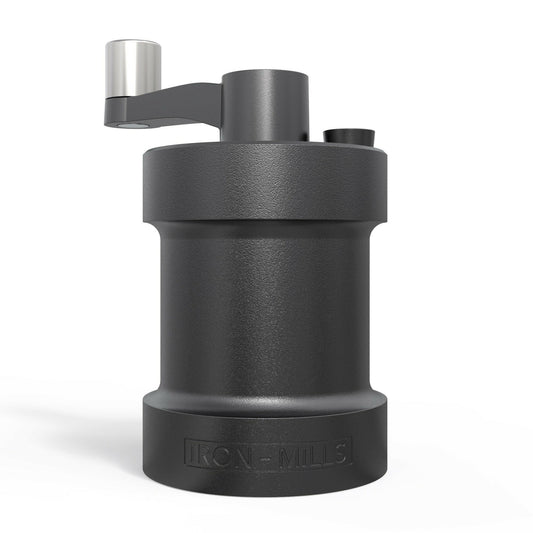
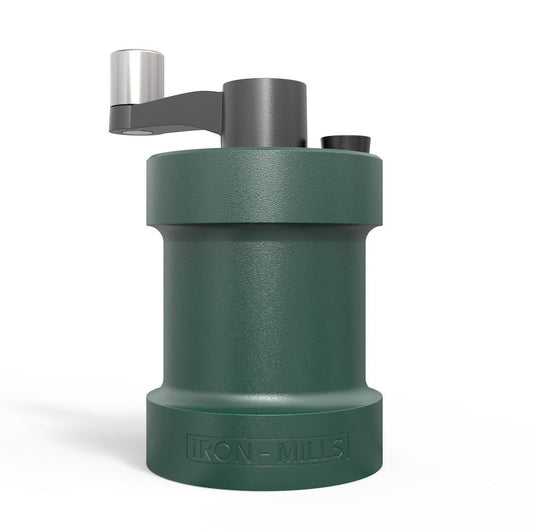
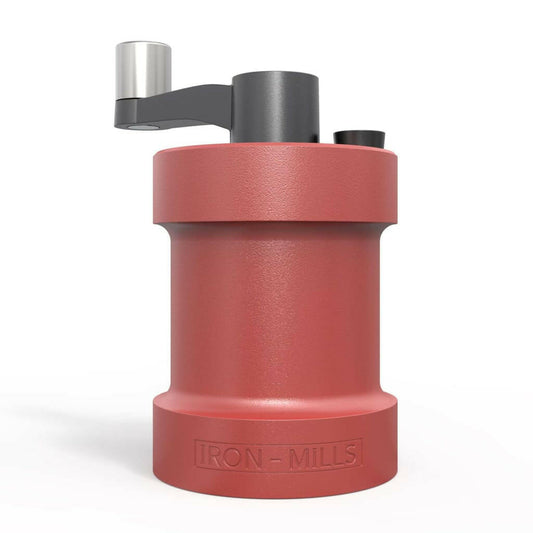
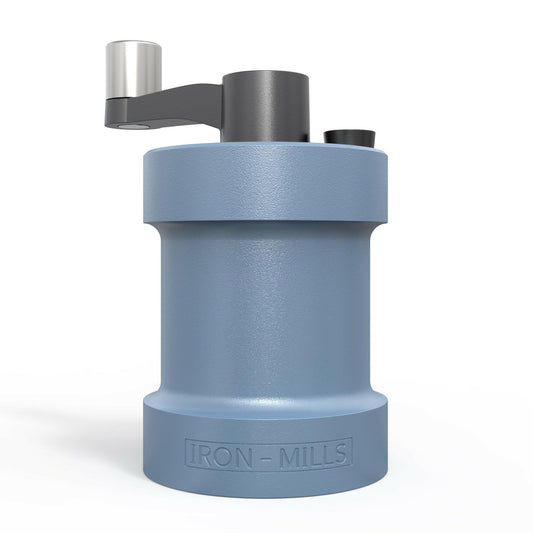
Then consider the body. A substantial mill offers more than a pleasing weight. It gives you control when grinding, stands securely on the worktop and is more likely to withstand daily use. A cast iron exterior brings particular presence to the kitchen: purposeful, durable and far removed from the throwaway grinder that arrives with a supermarket shop.
At Iron-Mills, that is the thinking behind a proper seasoning mill. The exterior should be built for years of handling, while the salt mechanism must be suited to the ingredient it holds. A kitchen tool earns its keep by working properly on an ordinary Tuesday night, not only by looking good when guests arrive.
The right way to use flaky salt at home
Treat flaky salt as a finishing ingredient rather than a default seasoning. Add it at the last moment, once cooking is complete, so the flakes keep their shape and deliver that clean, bright crunch. A few crystals are usually enough. Because the flakes sit on the surface of food, the flavour reaches the palate quickly.
This makes flaky salt particularly good on foods with a soft or rich texture. Think buttered radishes, poached eggs, grilled fish, roast vegetables, focaccia and caramel desserts. It also has a place on a well-rested steak, but use a light hand. The salt should sharpen the flavour of the meat, not cover it.
For seasoning during cooking, use a mill filled with coarse salt or measure from a jar. Ground salt disperses evenly through sauces, stews and marinades. It is more useful when you need control throughout the dish, rather than a final contrast on top.
There is no rule against keeping both to hand. In fact, it is often the most sensible arrangement: one reliable salt mill for daily seasoning, and one small container of flaky salt for the table and finishing touches. Each does a different job, and neither is wasted.
Care matters more with salt than pepper
Salt mills ask for a little attention, especially in a busy kitchen. Keep the mill away from steam where possible. Storing it directly beside a boiling kettle, simmering saucepan or dishwasher can introduce moisture that finds its way into the salt. A dry cupboard or a stable spot on the worktop is better.
Refill the mill only when it is empty or nearly empty. Topping up old salt with fresh crystals can leave compacted residue at the base, particularly if the mill has been exposed to humidity. Wipe the exterior with a dry cloth and avoid immersing the mill in water unless the maker specifically says it is safe to do so.
If the grind becomes stiff, do not force it. Empty the mill, inspect it for clumped salt and allow all parts to dry fully before refilling. Forcing a jammed grinder is how small faults become broken mechanisms. A well-made mill should be durable, but it should not be asked to overcome damp, solidified salt.
A practical buying decision
Before buying a salt mill, ask one straightforward question: what salt will live in it most of the time? If the answer is coarse, dry sea salt for cooking and the table, invest in a proper mill with a dedicated salt mechanism, a sturdy body and an adjustment that holds its setting.
If the answer is flaky sea salt, a salt cellar is likely the better purchase. It gives you immediate control, keeps the flakes intact and makes seasoning by hand feel natural rather than fussy. The best kitchen equipment is not the tool that claims to do everything. It is the one that does its intended job without complaint.
Keep the flakes for the final pinch, keep dependable ground salt within reach for everyday cooking, and your food will get the seasoning it deserves.